
After two years of strong gains, smallcap stocks fell sharply in 2025, but the correction may be setting up opportunities for long-term investors.
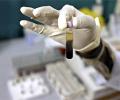
Earlier, Jaslok Hospital had issued an advisory to its doctors to avoid prescribing drugs manufactured by Ranbaxy.

Various industry bodies have sought immediate government intervention through the imposition of anti-dumping duties, claiming India has seen a surge in imports of Chinese goods over the past two weeks.

The Delhi High Court has asked the central government why it cannot reduce the GST on air purifiers, considering the poor air quality in Delhi. The court's concern is that the current 18% GST makes air purifiers unaffordable for the common man.

The needle-free vaccine will be available at private centres.

The Border Security Force (BSF) is training specialized 'drone commandos' and 'drone warriors' for modern warfare, with plans to deploy them in missions like Operation Sindoor. A 'School of Drone Warfare' has been inaugurated to provide training in UAV operations, anti-drone warfare, and surveillance.

The drugs seized include 3,089 kilograms of charas, 158 kg of Methamphetamine and 25 kg of morphine.

Wockhardt said, the drug regulator suspended the manufacture, sale or distribution of fixed dose combination of Dicyclomine Hydrochloride IP 10mg
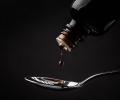
According to the ministry, chemical ethylene glycol was found in a batch of syrup during laboratory tests.

'The elimination of terrorists does not imply the neutralisation of terrorism. That terrorist ecosystem continues to thrive in Kashmir.'

India's drug regulator has initiated a probe and sought further details from the WHO after the global health body issued an alert that cough syrups manufactured by an Indian firm could potentially be linked to the death of children in Gambia.
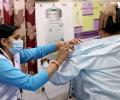
An intranasal vaccine as a booster dose would be easier to administer in mass vaccination campaigns and has the potential to prevent transmission.
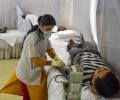
Indian Council of Medical Research Director General Balram Bhargava had on Monday recommended the use of hydroxychloroquine for treating healthcare workers handling suspected or confirmed coronavirus cases.
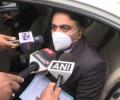
'Safety is my first priority.' 'I need to ensure that any drug or vaccine that our citizens get is first safe.'

Legal experts and official sources said the alleged submission of fake documents can also lead to criminal charges against Novartis.

The government has been stringent with pricing changes. Prices of 651 essential medicines came down from April 1, 2023 by 6.73 per cent with the government capping ceiling prices of these drugs.
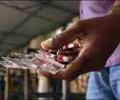
The FDA Maharashtra on Friday lodged an FIR against Snapdeal.
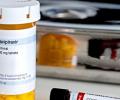
Favipiravir is the only oral anti-viral treatment approved in India for potential treatment of patients with mild to moderate Covid-19 disease.

Russia's Sputnik V vaccine is currently being manufactured in India by Dr Reddy's Laboratories.

The drug regulatory agencies of India and Canada are planning to collaborate on improving the quality of drugs traded between the two countries, besides helping the industry in both the countries to tap the opportunities in the field of generic medicines and drug development.
Bangalore-based Stempeutics Research received clearance from the Drug Controller General of India to conduct human clinical trials to develop drugs using stem cells. With this, India became the first country after the US to allow human clinical trials to develop drugs by using dormant cells in the body that have natural regeneration capabilities. Once injected into a patient, the stem cells can be controlled with a simple magnet to direct them to the damaged area and cure
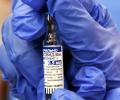
The parties intend to produce over 300 million doses of the vaccine in India per year.
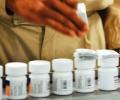
In what could be the beginning of fresh troubles for Ranbaxy Laboratories, which has just managed to settle long-pending issues with the US Department of Justice after agreeing to pay a penalty of $500 million, the health ministry in India, too, has decided to initiate a probe.
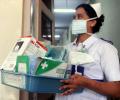
FabiFlu is the first oral favipiravir-approved medication in India for the treatment of COVID-19. Favipiravir can be used for coronavirus patients with co-morbid conditions such as diabetes and heart disease with mild to moderate COVID-19 symptoms.

SII has been asked to submit to the DCGI's office details of medication used in accordance with the protocol for management of adverse events.
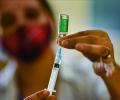
"It has been decided that for approval of COVID-19 vaccines in India for restricted use in emergency situation which are already approved for restricted use by US Food Drug Administration, European Medicines Agency, UK Medicines and Healthcare products Regulatory Agency, Pharmaceuticals and Medical Devices Agency Japan or which are listed in WHO Emergency Use Listing and which are well established vaccines from the stand point that millions of individuals have already been vaccinated with the said vaccines, the requirement of conducting post approval bridging clinical trials and of testing every batch of vaccine by CDL, Kasauli can be exempted, if the vaccine batch/lot has been certified and released by National Control Laboratory of country of origin," it said.

The drug comes in powder form in a sachet, which is taken orally by dissolving it in water. It accumulates in the virus-infected cells and prevents virus growth by stopping viral synthesis and energy production.

Covaxin has been indigenously developed by Bharat Biotech in collaboration with the Indian Council of Medical Research.

Dominic Xavier ponders the Vaccine Dilemma: Should he take the shot or not?

The move has come days after the state government announced to form a special investigation team to probe into the death of Disha Salian, the former manager of late actor Sushant Singh Rajput.
Firms, foreign and Indian, reiterate they follow the rules fully. Earlier, SC had rapped govt for gaps in law and enforcement, including on compensation.
DCGI has approved to market Itolizumab (ALZUMAb) injection 25mg and 5mL solution for emergency use in India for the treatment of cytokine release syndrome (CRS) in moderate to severe ARDS (acute respiratory distress syndrome) patients due to COVID-19, Biocon said in a release.
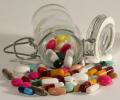
Experts believe the move will have little impact given limited production of generic drugs and authority of doctors in prescribing medicines.
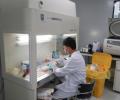
Concerned about the rise of antibiotic resistance and the time it takes for drugs developed abroad to reach Indians, the government is considering holding its own clinical trials. Clinical trials for new drugs have so far primarily been conducted only by private Indian or foreign drug firms. But given the stringent nature of India's regulatory environment for clinical trials, several pharmaceutical companies have moved their trials out of India. As a result, only 1.2 per cent of global clinical trials take place in India.
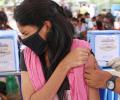
The DCGI's approval came following recommendation by the Subject Expert Committee of the Central Drugs Standard Control Organisation.

The Narcotics Control Bureau (NCB) on Saturday said it has arrested Jaffer Sadiq, a Tamil Nadu-based alleged dealer of narcotics, in connection with an international drugs trafficking investigation case.
As per the clinical trial protocol approved, 150 subjects with mild to moderate COVID-19 will be randomised in the study in a 1:1 ratio to Favipiravir with standard supportive care or standalone standard supportive care. Treatment duration is a maximum of 14 days and the total study duration will be a maximum for 28 days from randomisation.
NPIL had announced that it would team up with the French company to develop a drug for the epidemic about six months ago, following the spread of the disease, mainly in southern India and Maharashtra in the last two years. Currently, drugs are not available to effectively treat the disease and doctors in the country administer viral disease drugs such as paracetamol and other anti-biotics to check the infection.

While the opposition party asked the government to stop boasting about India being a pharmacy to the world and take strictest action, the ruling party accused it of deriding India in its "hate" for Prime Minister Narendra Modi.
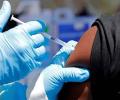
It has been approved by the European Medicines Agency for conditional marketing authorisation.
